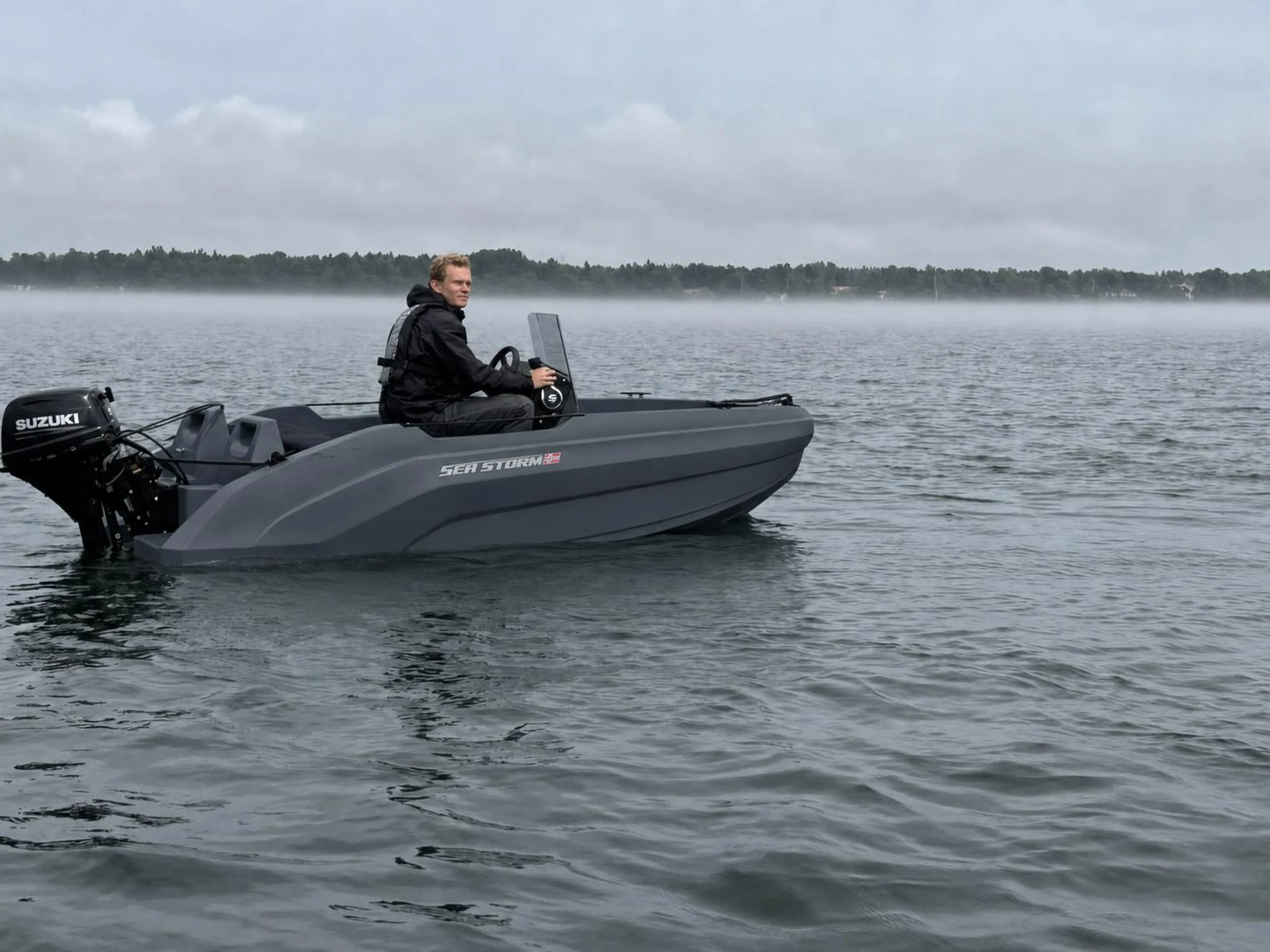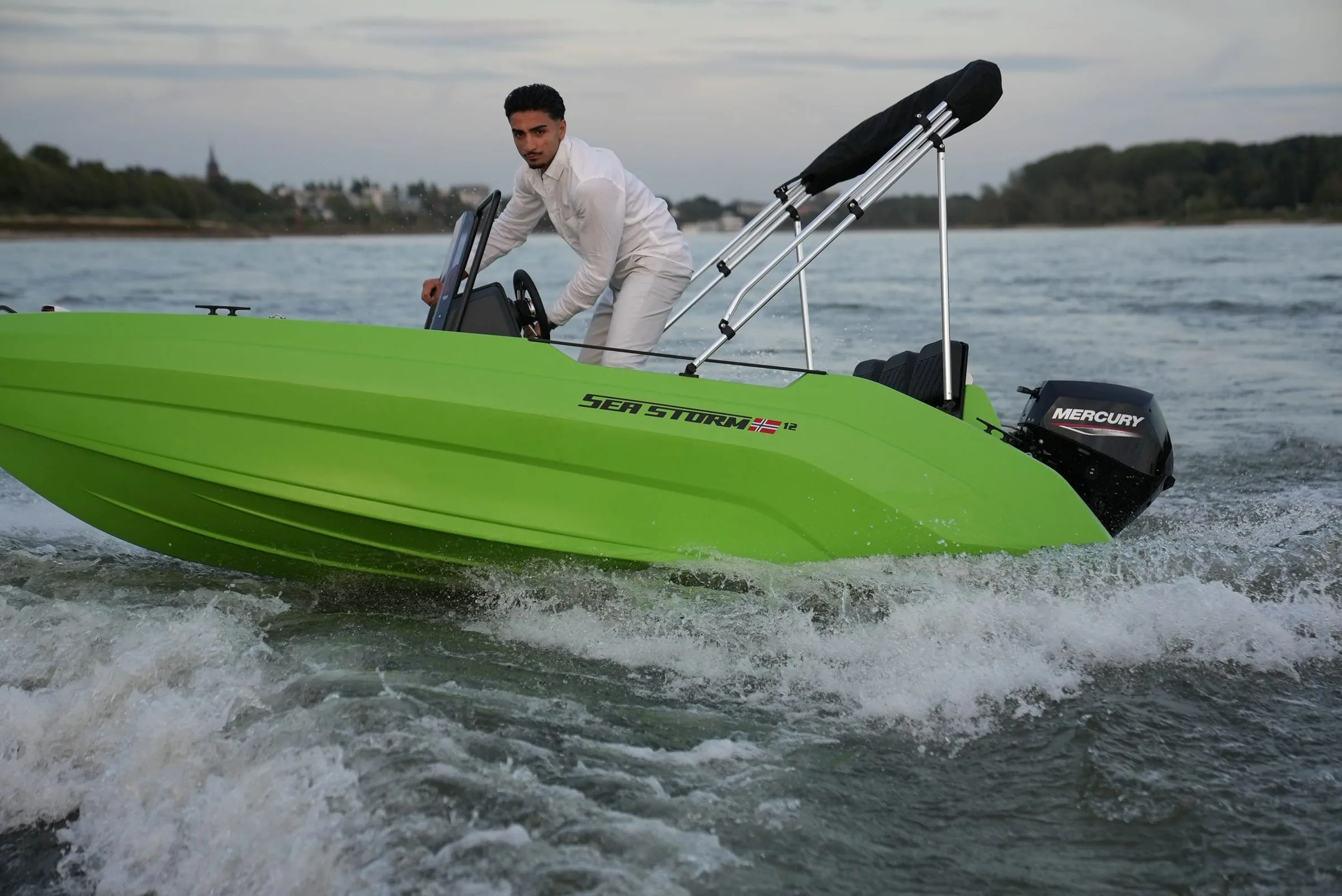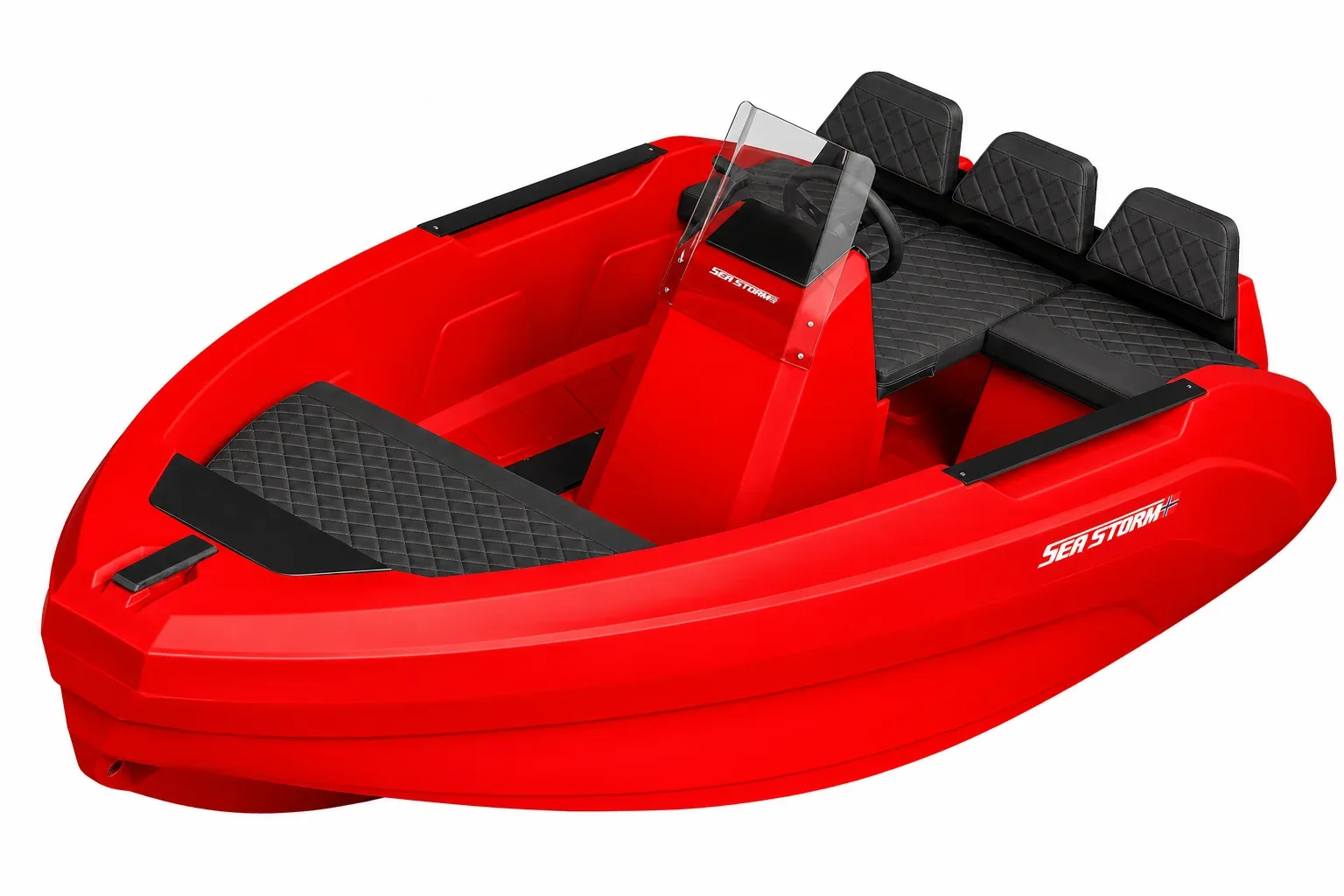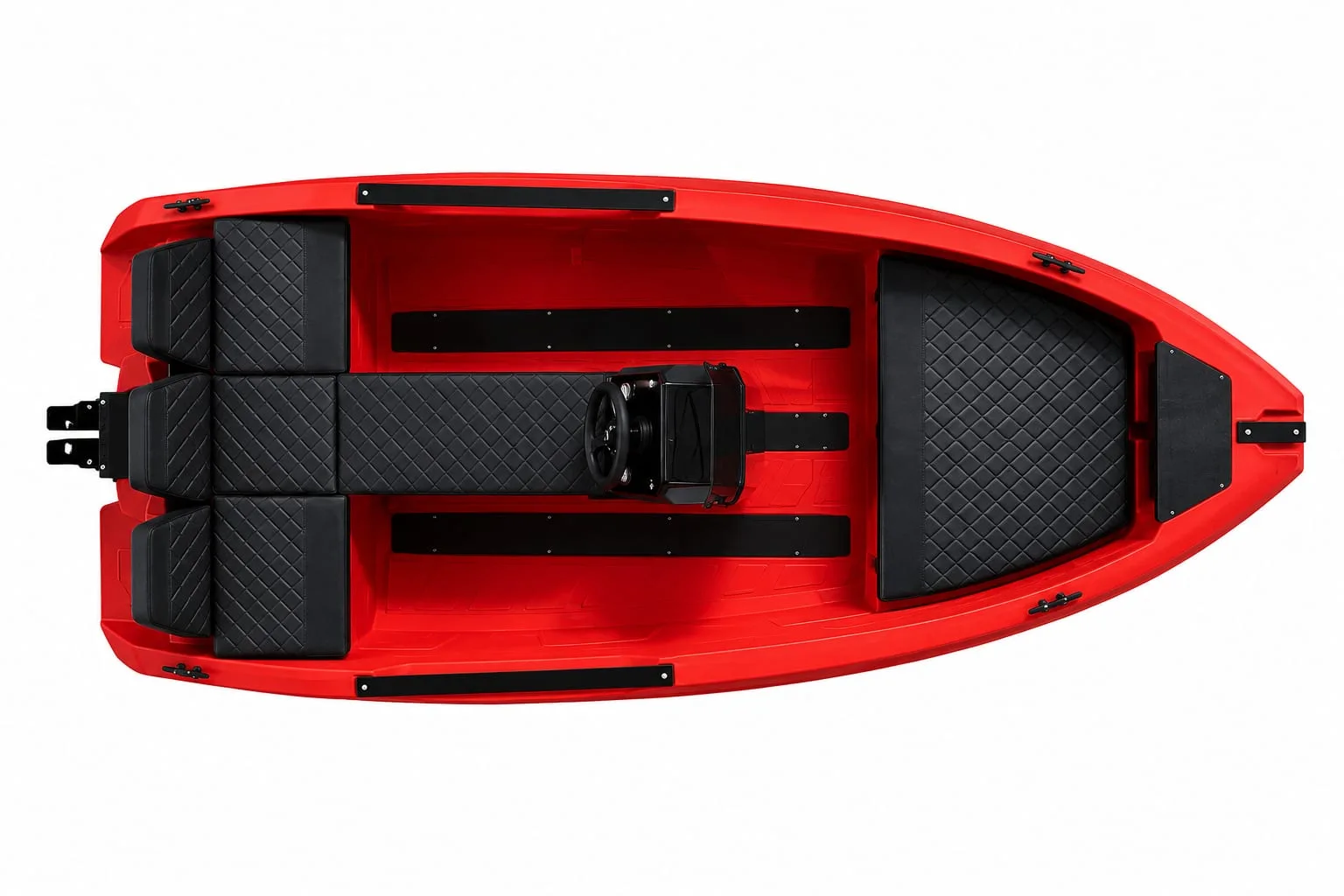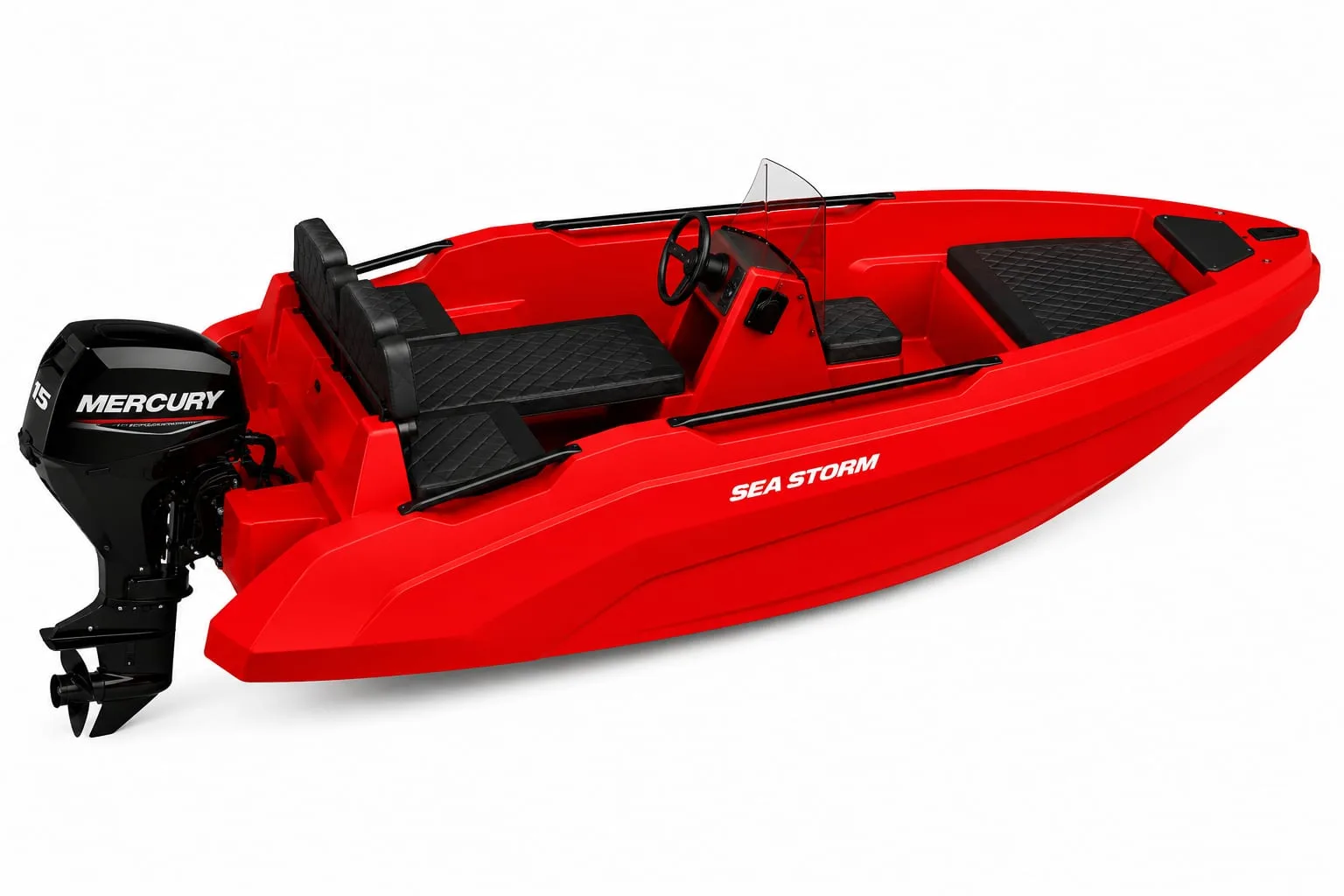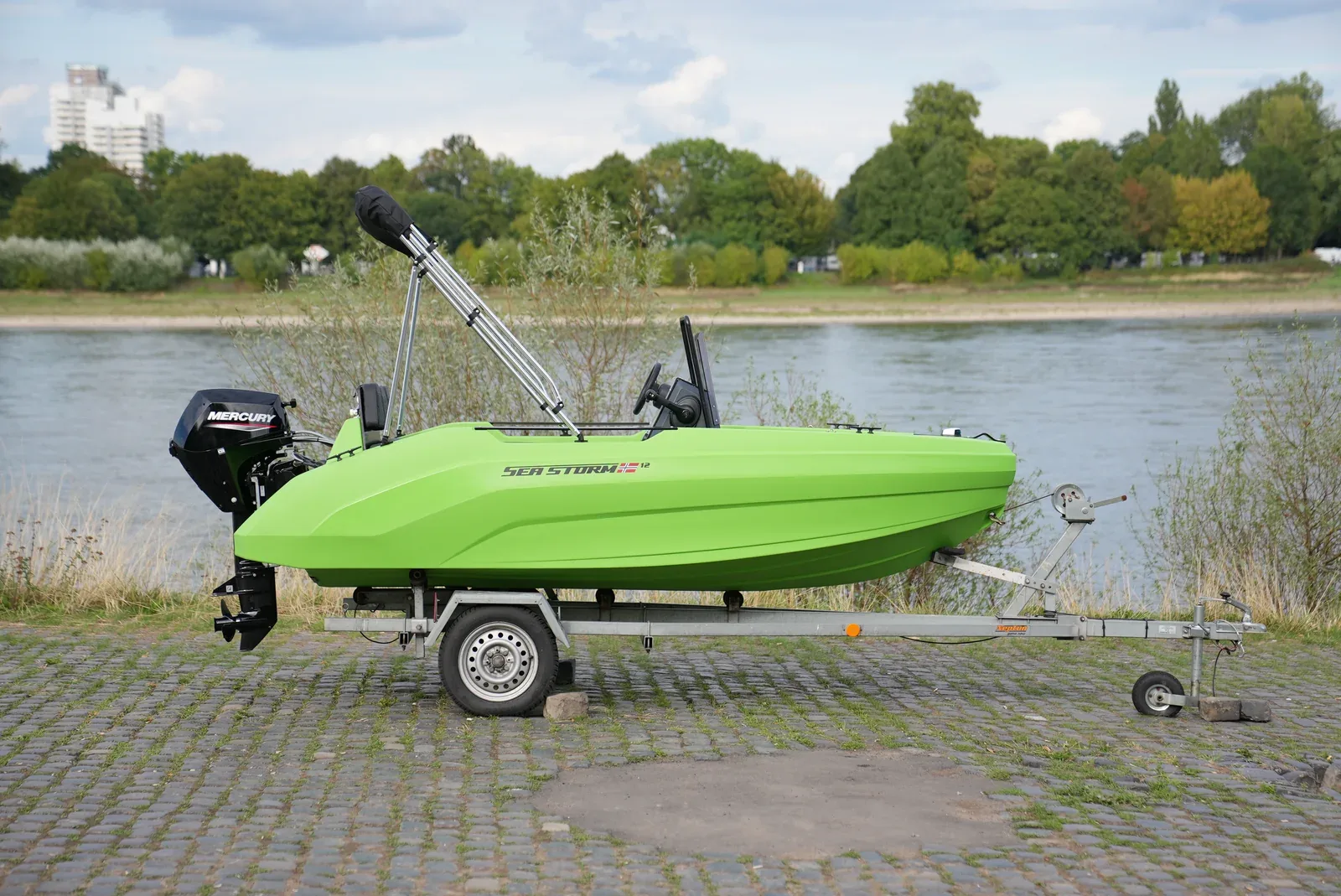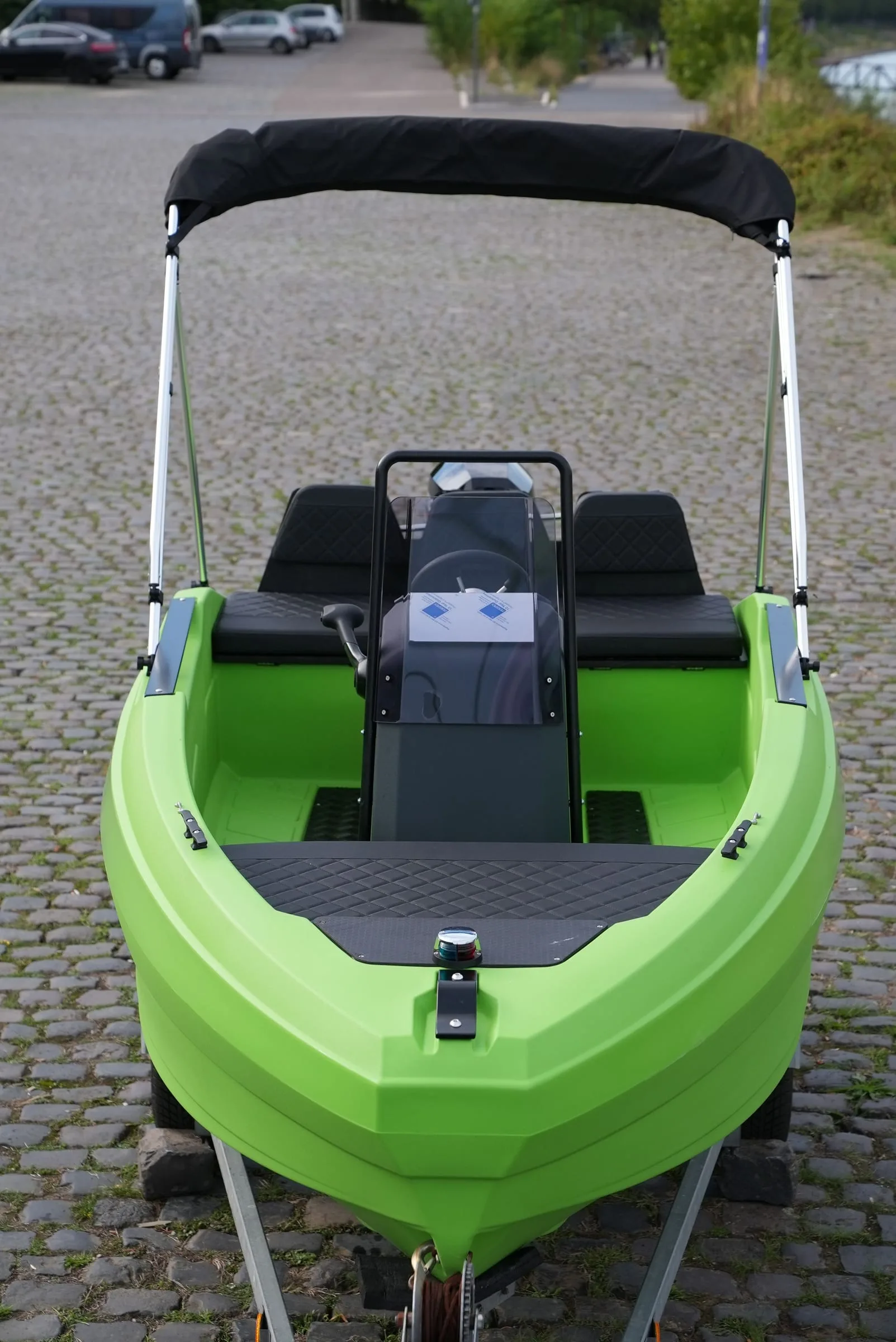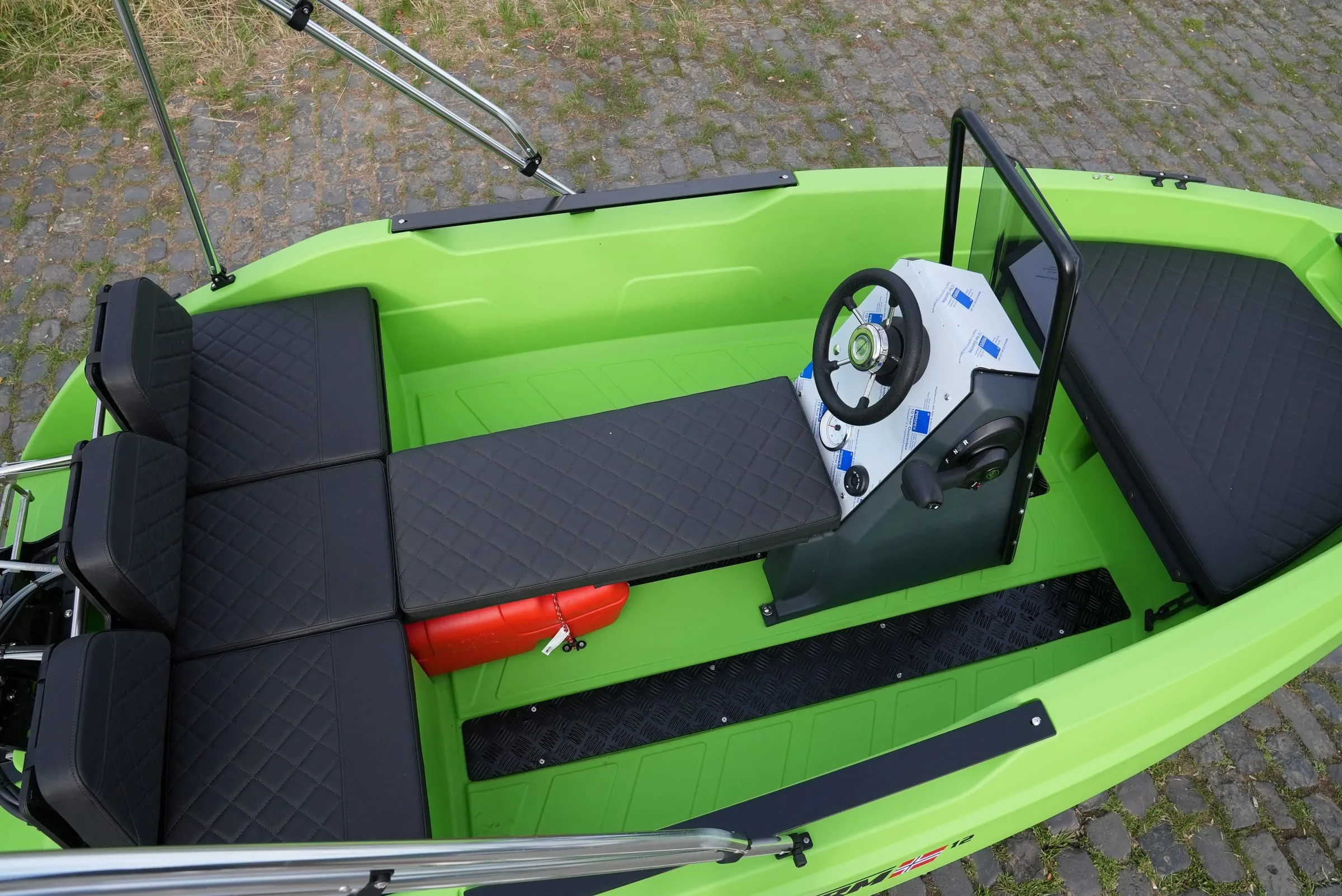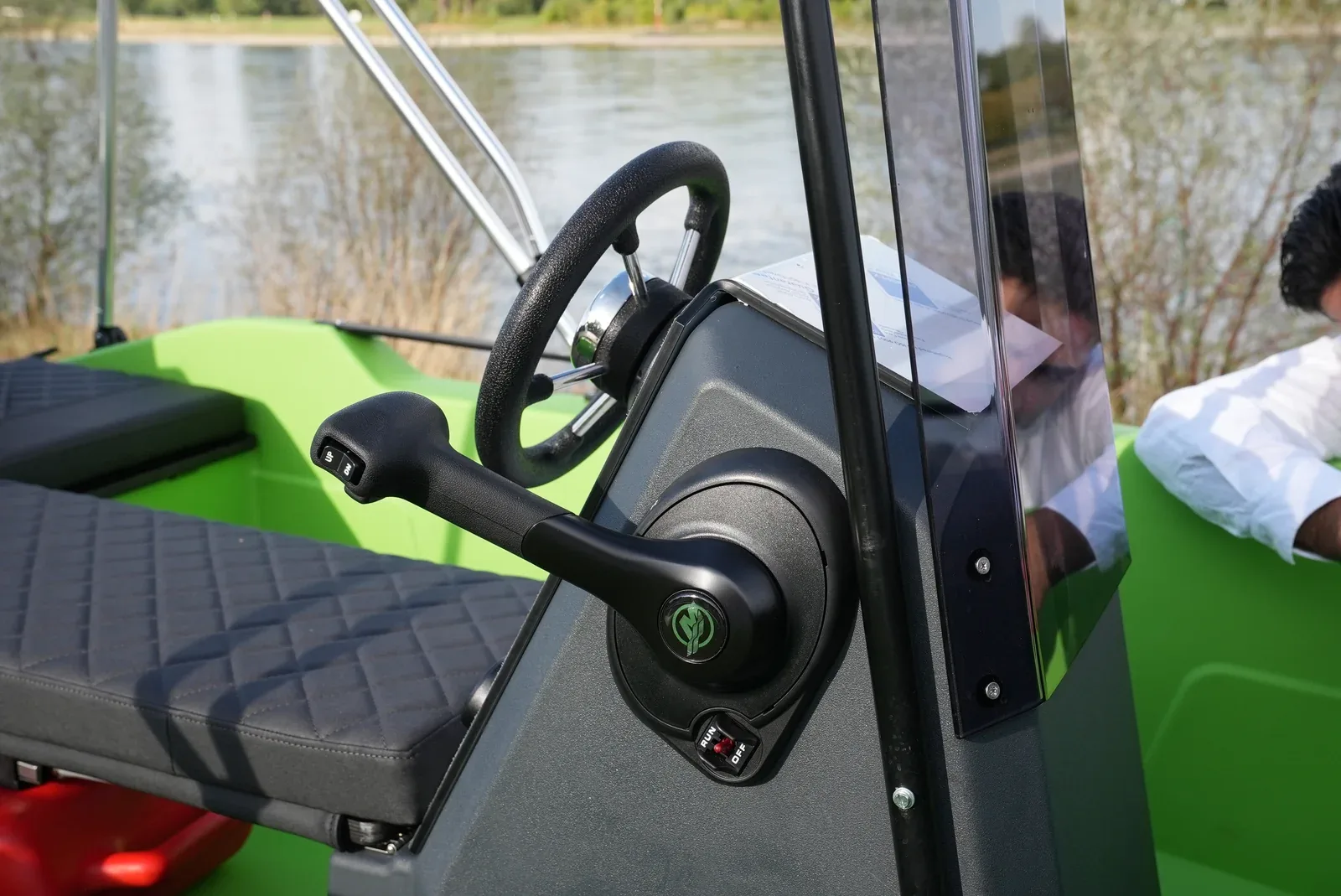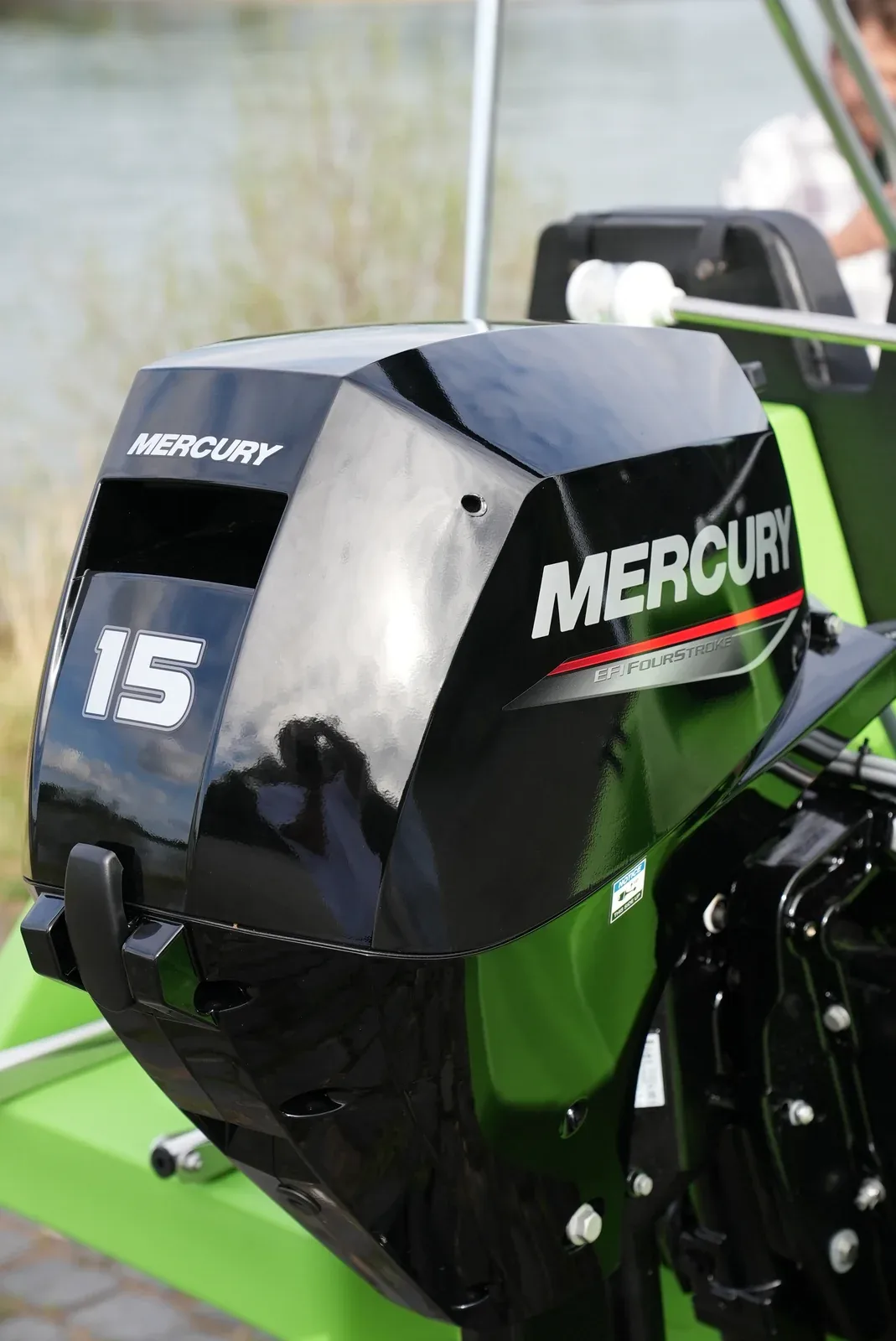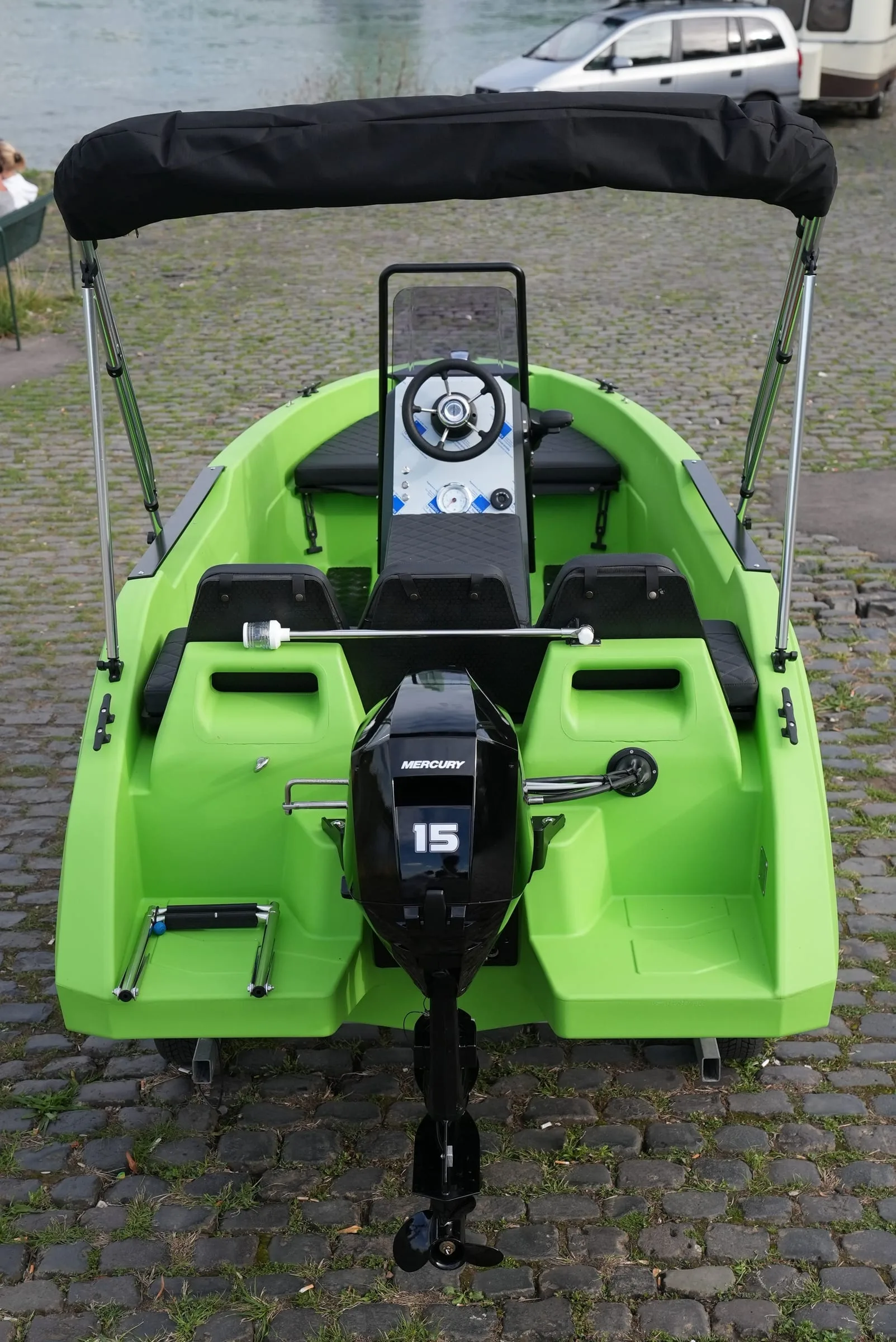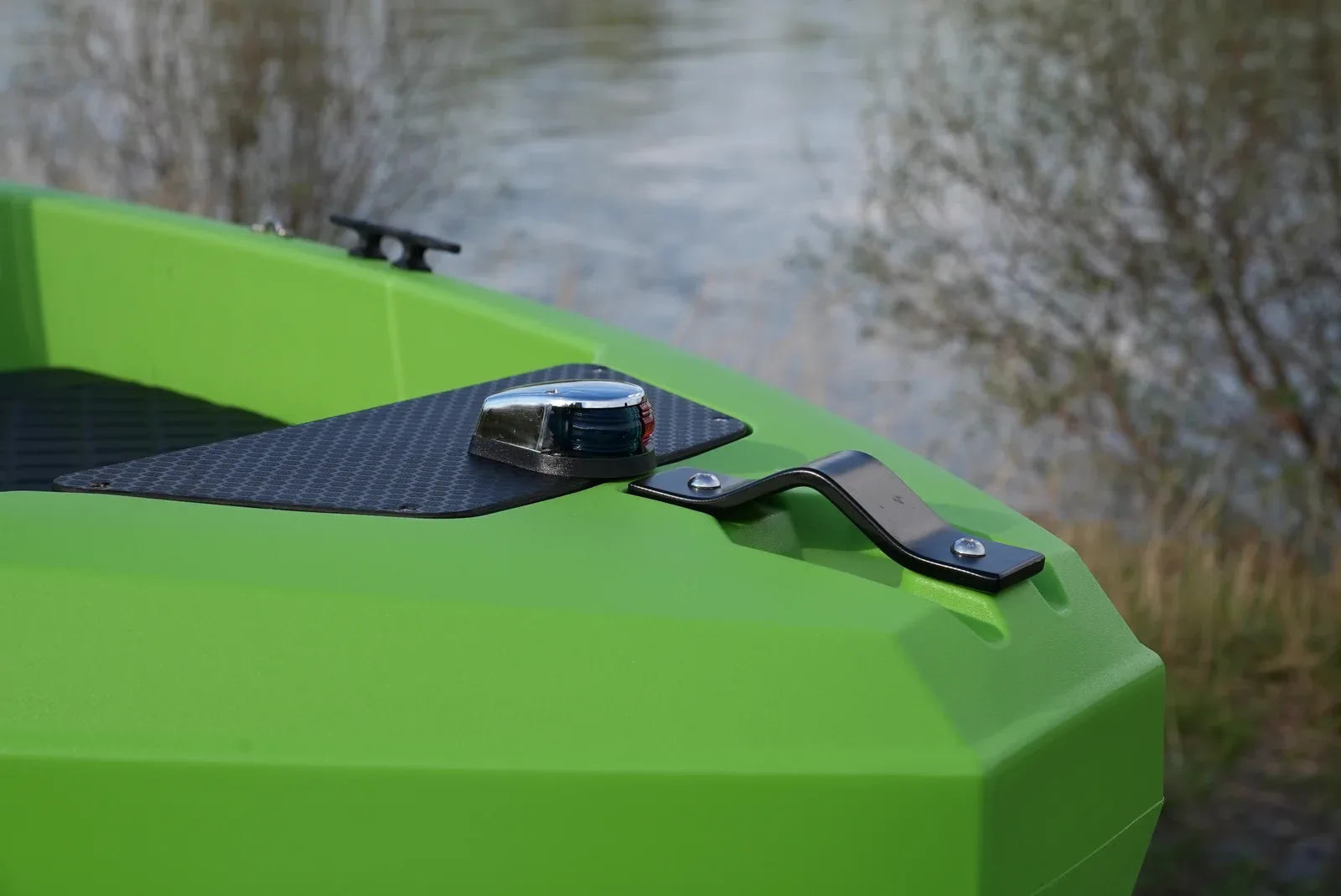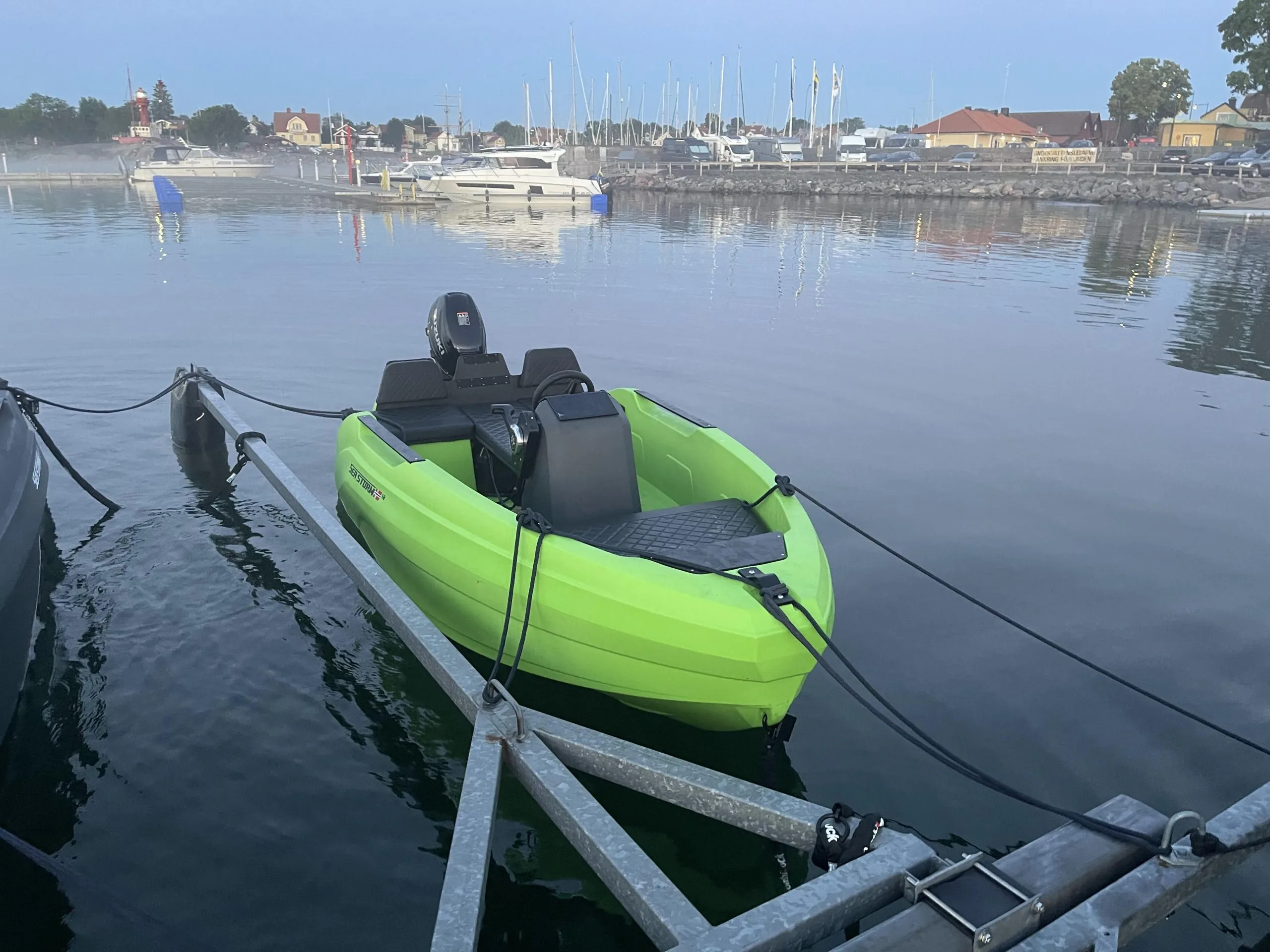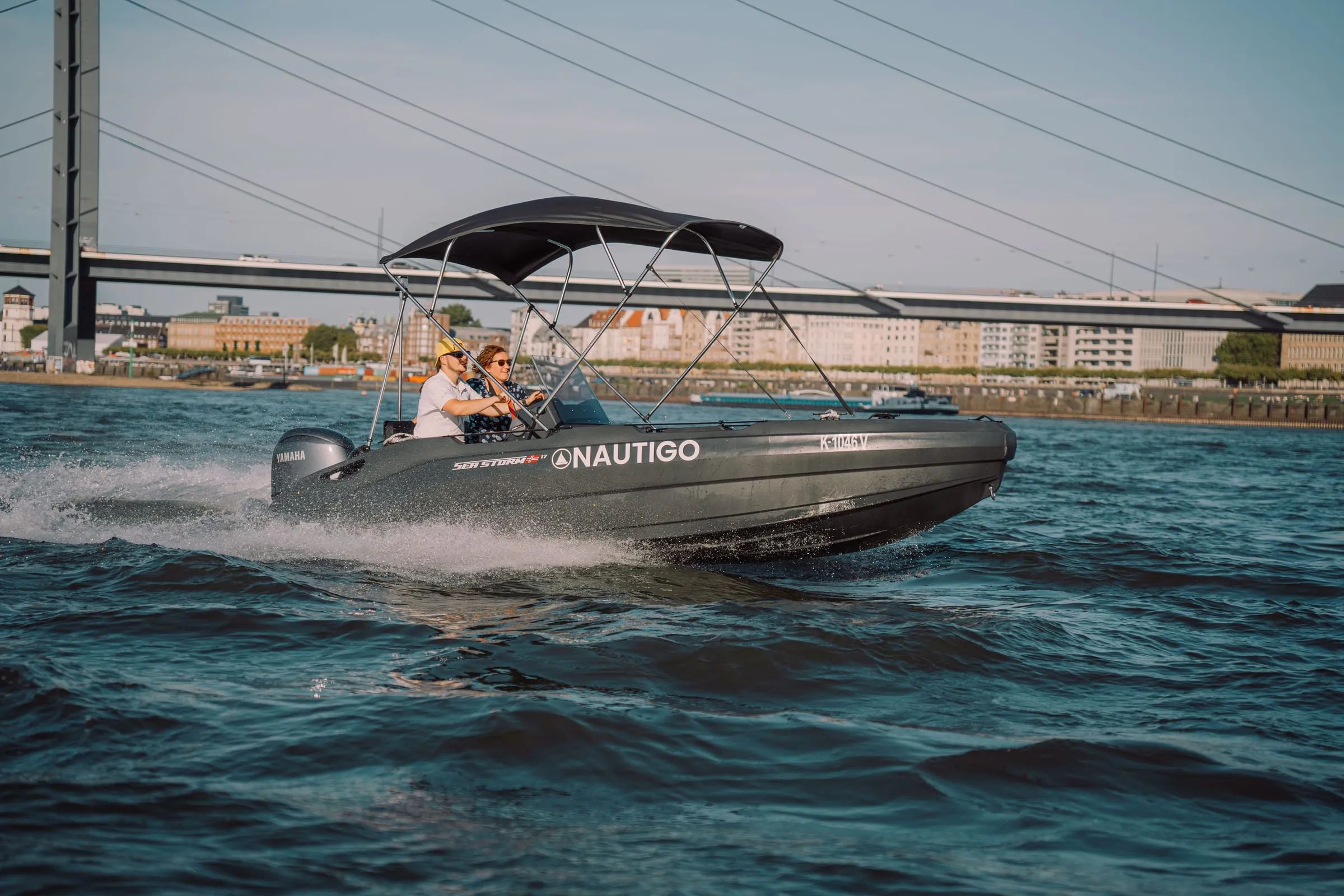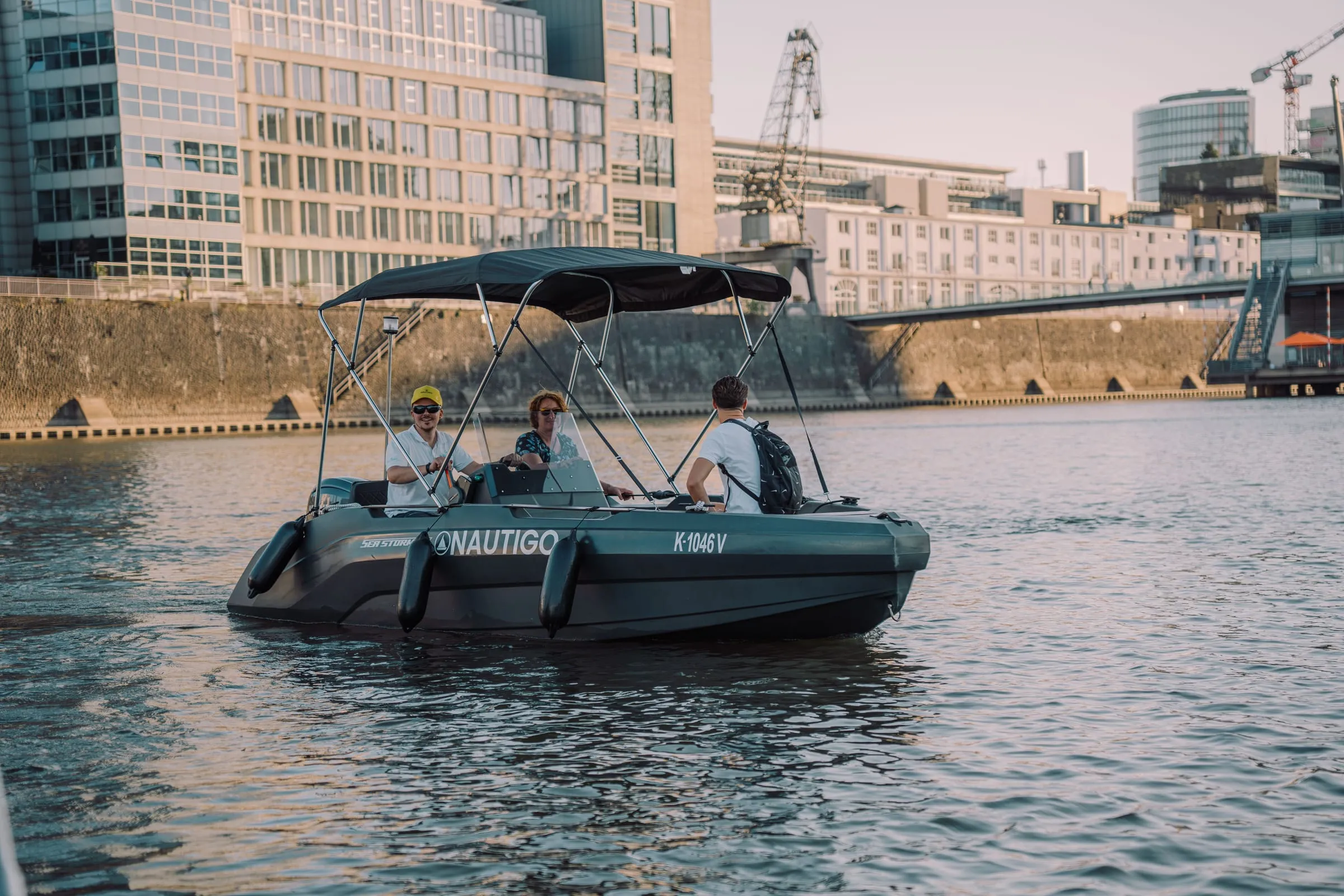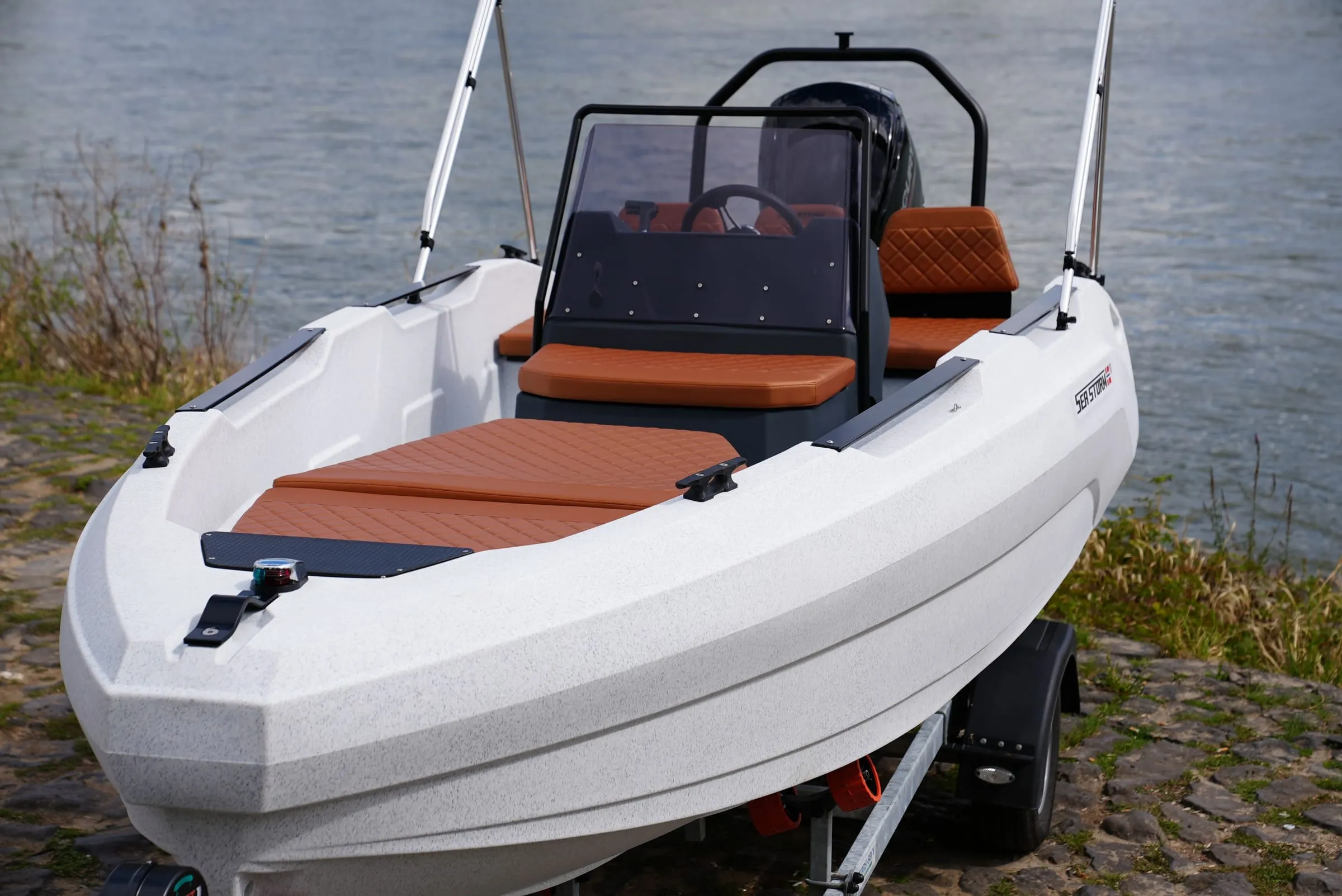
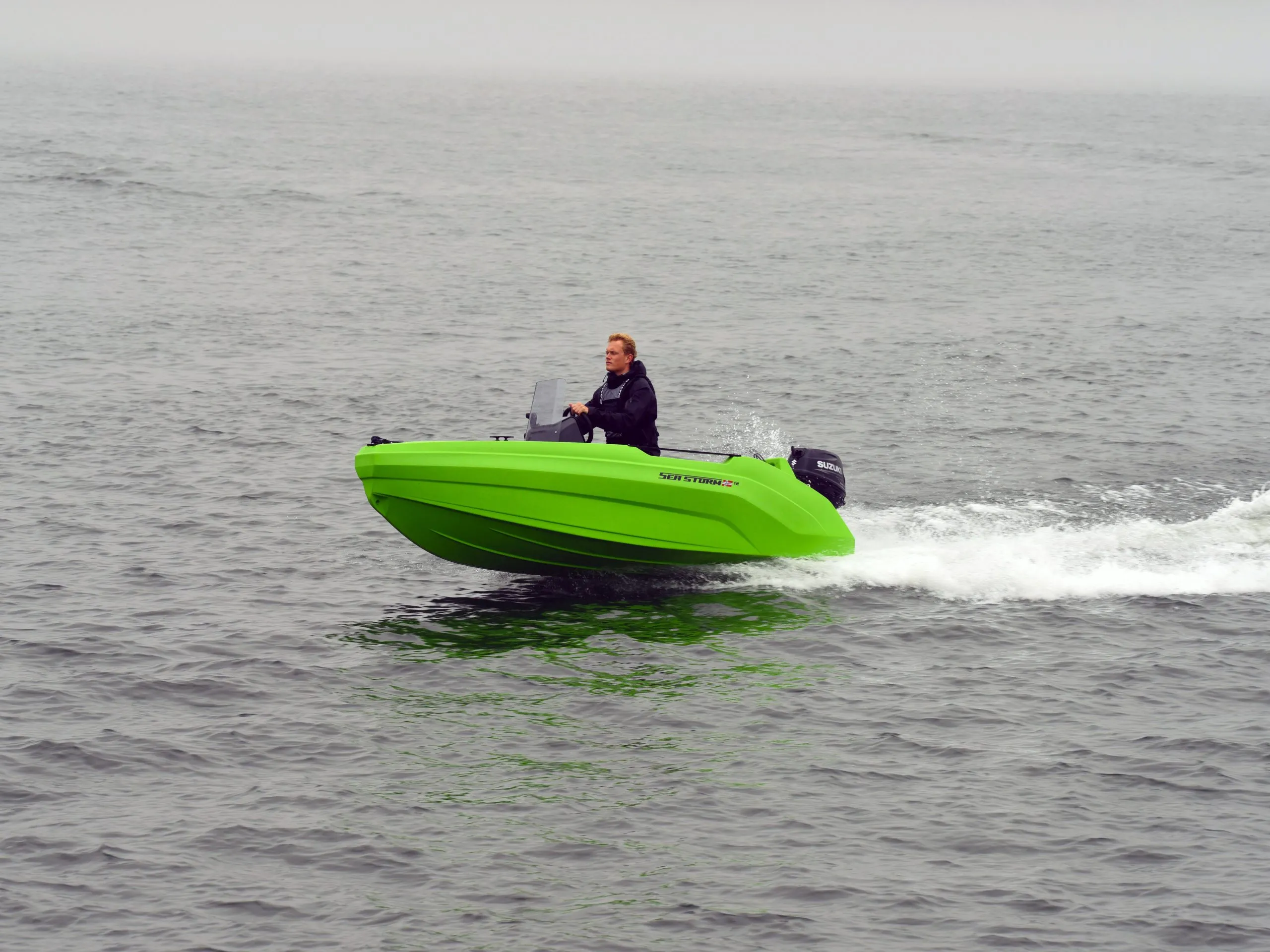
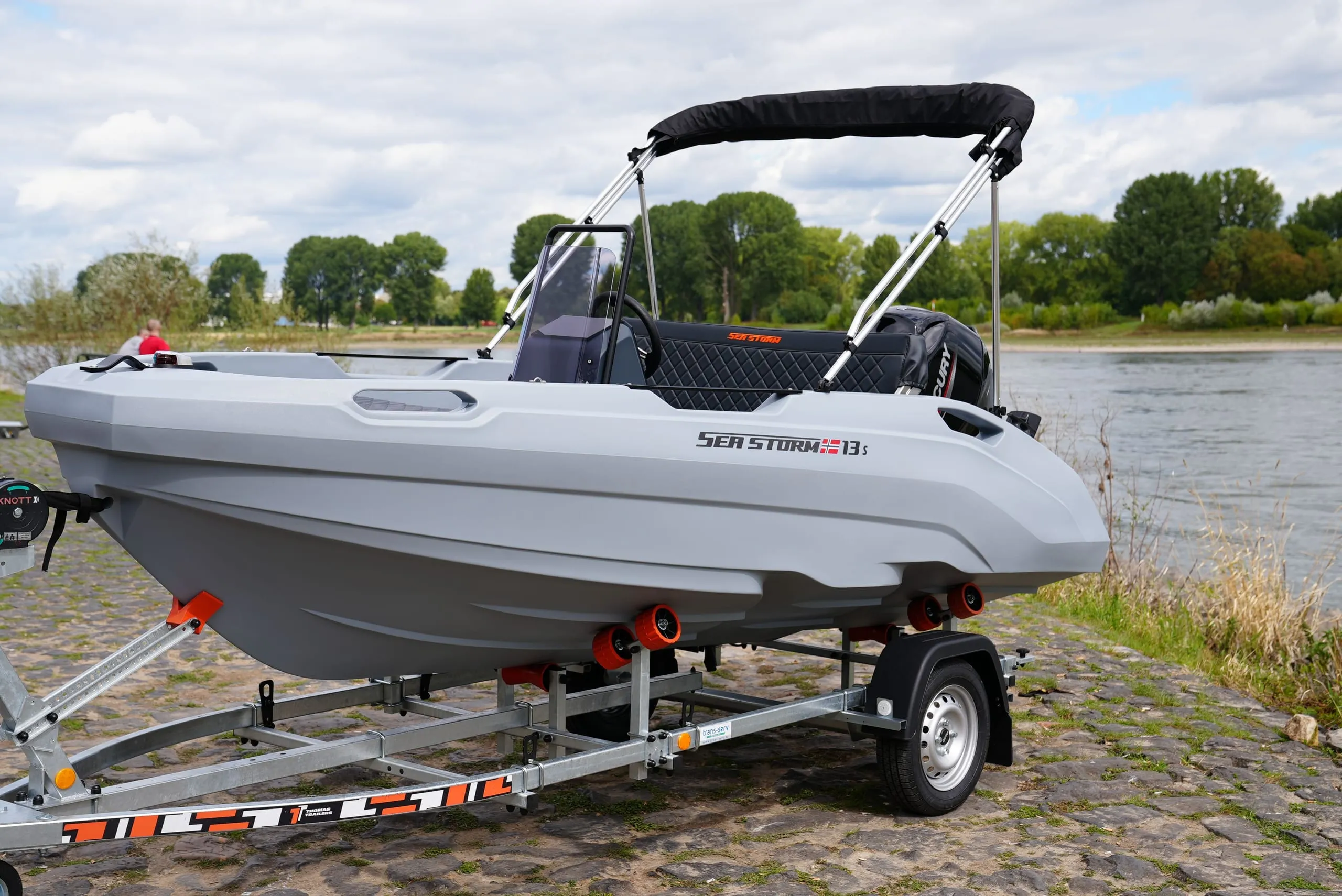
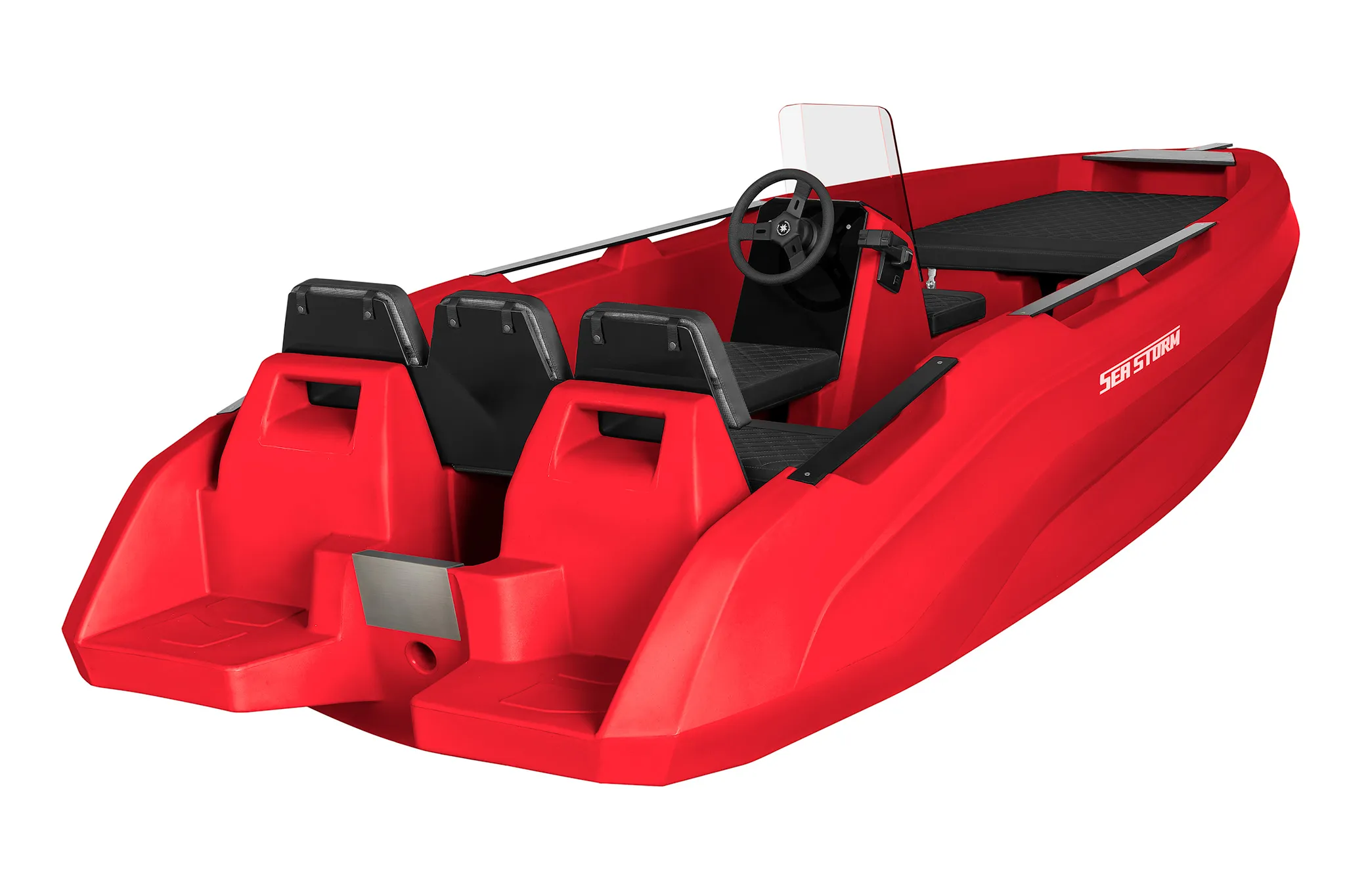
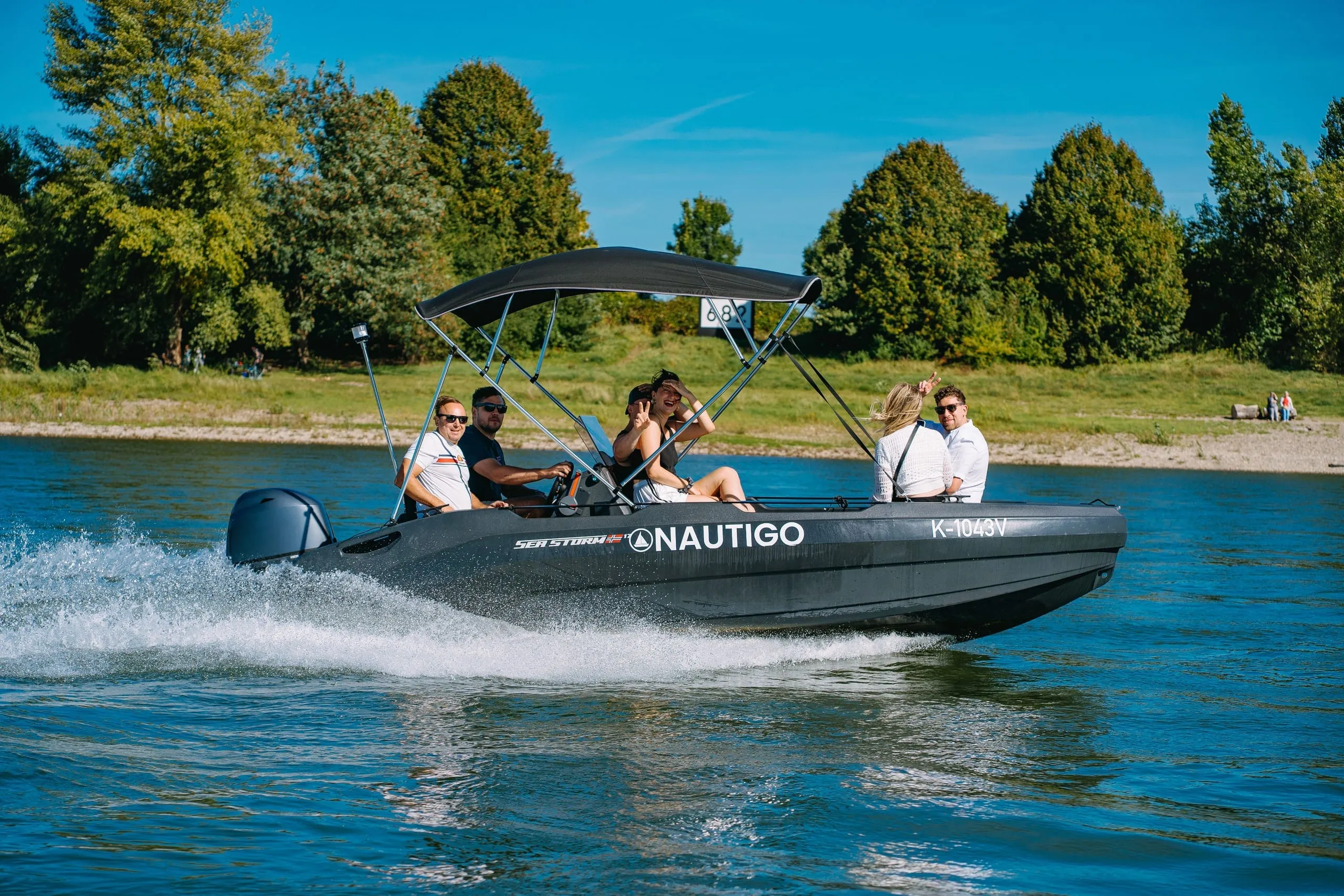
Four HDPE boats, four kinds of use
All four SeaStorm models share the same double-wall HDPE hull construction and come with a Mercury outboard fitted (SeaStorm 17 with 70 hp: Yamaha). What separates them is size, crew and how much power the transom accepts. The table is a quick orientation; the full comparison with beam, top speed and every engine option sits above.
| Model | Length | Persons | Engine range | From | Typical use |
|---|---|---|---|---|---|
| SeaStorm 12 | 3.66 m | 4 | 15–30 hp | €12,499 | Lakes, rivers, first boat, easy trailering |
| SeaStorm 13s | 4.00 m | 5 | 15–60 hp | €14,499 | Sporty day trips on a stepped hull |
| SeaStorm 14 | 4.28 m | 5 | 15–40 hp | €15,499 | Family, fishing, touring on an open deck |
| SeaStorm 17 | 5.17 m | 6 | 15–80 hp | €19,499 | Larger crews, more reserves, coastal day runs |
Start with the waters and the crew, not with the engine. Two anglers on a reservoir need something different from a family of five heading out along the coast. If you are unsure, send us your waters and the number of people on board and we suggest a model in writing.
What makes HDPE a good boat material
High-density polyethylene has a density of 930 to 970 kg/m³ [3] and absorbs almost no water [4]. Unlike glass-reinforced plastic (GRP, fibreglass) it needs no gelcoat, and there is no laminate in which osmotic blisters can form [6]. Polyethylene is less UV-resistant than polycarbonate, for example; additives such as UV stabilisers or carbon black slow down degradation [5].
We explain density, UV behaviour, weldability and the limits of the material, with standards and sources, in our article on HDPE boat material properties.
Double-wall hull: a buoyancy reserve built in
The real safety feature is in the construction rather than in the plastic itself. Every SeaStorm hull is double-walled, and the cavity between inner and outer skin acts as a buoyancy reserve. Which loads the boat may carry and how it floats and stays stable is defined by its builder’s plate, its conformity documents and the buoyancy and stability assessment. For boats under 6 m, EN ISO 12217-3 [2] describes that assessment; the standard actually applied is named in your boat’s documents.
Low maintenance, not no maintenance
Without gelcoat there is no polishing routine and no osmosis treatment. You still rinse the hull, check it for damage and store it sensibly over winter; structural damage is repaired by plastic welding in a specialist workshop. Whether antifouling makes sense depends on where the boat is berthed, not on the hull material alone. The Mercury outboard, the fittings and the safety equipment keep their own service intervals. Our care and winterising guide for HDPE boats walks through each step.
HDPE, fibreglass or aluminium?
Buyers of a small motorboat choose between three hull materials: HDPE, glass-reinforced plastic (fibreglass, GRP) and aluminium. The table sets out what the sources support. Density describes the material, not the finished boat: double walls, foam and equipment decide what the boat weighs.
Comparison
| Property | HDPE | Fibreglass (GRP) | Aluminium |
|---|---|---|---|
| Material | High-density polyethylene, a thermoplastic [3] | Polyester resin with glass fibres, about 30 % glass to 70 % resin [6] | Light metal [8] |
| Density of the material | Advantage: 930 to 970 kg/m³, lighter than water [3] | depends on glass content, no single figure | 2.70 g/cm³ [8] |
| Water in the material | Advantage: absorbs almost no water [4] | Disadvantage: water diffuses through gelcoat and laminate, up to about 2 % [6] | metal, no laminate |
| Osmotic blisters | Advantage: no laminate, no gelcoat | Disadvantage: possible; reaching that stage can take 10 to 20 years or longer; treatment: remove gelcoat, wash for weeks, about 1 mm of epoxy [6] | no laminate, no gelcoat |
| Surface and care | no gelcoat; UV protection from additives such as UV stabilisers or carbon black [5] | Disadvantage: gelcoat needs waxing [7] | Advantage: no gelcoat to wax, often less maintenance than fibreglass [7] |
| Damage and repair | hard to glue, joints are welded [3] | Disadvantage: on boulder-strewn rivers hull damage can become a perpetual issue [7] | Advantage: dents rather than cracking; repair usually costs less [7] |
| Recycling | Advantage: commonly recycled, resin code 2; mechanical recycling is usual [3] [11] | Disadvantage: no economically and ecologically sustainable process established on the market yet [10] | Advantage: recycling needs only 5 % of the energy of new production [9] |
| Sea state and shape | no sourced statement | Advantage: heavier than aluminium, so usually better seakeeping; complex hull shapes possible [7] | Disadvantage: lighter, so more easily buffeted by the wind [7] |
No material suits everyone. HDPE is strong where water absorption, gelcoat care and recycling matter; according to NMMA, aluminium boats usually weigh substantially less than fibreglass boats of the same size.
SeaStorm hulls are made of HDPE. That pays off where the boat often meets jetties, slipways and trailer rollers and there is little time for hull care. Fibreglass and aluminium have strengths of their own. Read the HDPE vs fibreglass comparison for the full material trade-offs, and the ten-year cost comparison if running costs decide it for you.
Where an HDPE boat makes sense
- Fishing: an open, walk-around deck that shrugs off rod holders, tackle boxes and wet boots. See HDPE fishing boats and the console fishing boat.
- Lakes, rivers and trailer use: a hull that tolerates stony slipways and repeated launching.
- Rental and charter fleets: fewer cosmetic repairs between guests, see boats for rental and charter.
- Boating schools: training boats that forgive a hard landing, see boats for boating schools.
Buying and delivery
Every SeaStorm is handed over ready to run: Mercury outboard (SeaStorm 17 with 70 hp: Yamaha) mounted and checked in a pre-delivery inspection, with battery, tank, steering and safety kit on board. Prices are ex works in Estonia and include 19 % German VAT. You collect in Leverkusen, Germany, or we deliver to your address; the delivery cost calculator prices your postcode instantly, and the delivery page for Europe lists which countries are quoted on request. Production takes about two to six weeks. You pay by bank transfer, either in full or with a 30 % deposit.
Licence requirements depend on the country and the waters where you use the boat, and on the engine you choose. Our licence guide per model lists each country’s rule with its legal source.
Configure your HDPE boat below and message us; we reply in writing.